

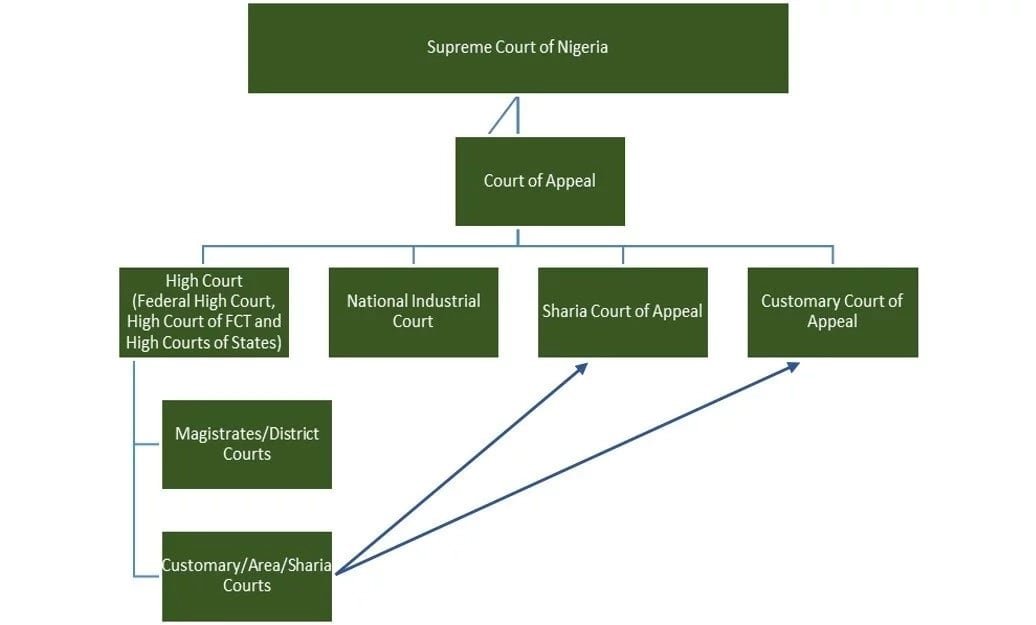
The hierarchy of courts in Nigeria is a crucial aspect of its legal system. At the top sits the Supreme Court, the highest judicial body in the country. Below it are the Court of Appeal and the High Courts, each playing a vital role in the administration of justice. Understanding this hierarchy is essential for anyone navigating the Nigerian legal system. Join us as we delve into the intricacies of the hierarchy of courts in Nigeria and shed light on its significance in the judicial process.

The Hierarchy of Courts in Nigeria: Understanding the Legal System
Welcome to our detailed guide on the hierarchy of courts in Nigeria. If you’ve ever wondered about how the legal system works in Nigeria and the different levels of courts, you’re in the right place. In this article, we will explore the structure of the Nigerian judiciary, the functions of various courts, and how cases move through the system. Let’s dive in!
Understanding the Nigerian Judiciary
The Nigerian judiciary is responsible for upholding the rule of law and ensuring justice is served. The judiciary is made up of different levels of courts, each with specific roles and jurisdictions. Understanding the hierarchy of courts is essential for anyone navigating the legal system in Nigeria.
The Supreme Court of Nigeria
At the top of the hierarchy of courts in Nigeria is the Supreme Court. The Supreme Court is the highest appellate court in the country and has the final authority on legal matters. Its decisions are binding on all other courts in Nigeria.
Functions of the Supreme Court
The Supreme Court hears appeals from lower courts and decides on constitutional matters, disputes between states, and cases involving the interpretation of federal laws. Its role is crucial in maintaining the integrity and consistency of the legal system.
The Court of Appeal
Below the Supreme Court is the Court of Appeal. The Court of Appeal is divided into different divisions, each responsible for hearing appeals from specific lower courts.
Divisions of the Court of Appeal
The Court of Appeal has divisions such as the Criminal Division, Civil Division, and Sharia Court of Appeal. Each division specializes in different types of cases, ensuring a more focused approach to justice.
The High Courts
Next in the hierarchy are the High Courts. Each state in Nigeria has its High Court, which has jurisdiction over civil and criminal cases within the state’s territory.
Roles of the High Courts
The High Courts handle a wide range of cases, including contract disputes, land matters, and serious criminal offenses. They play a crucial role in delivering justice at the state level.
The Sharia Courts
In states that have adopted Sharia law, Sharia Courts exist to handle cases involving Islamic law. These courts operate alongside the regular court system and have jurisdiction over certain matters, such as marriage, inheritance, and other personal law issues.
Specialized Courts
Aside from the main hierarchy of courts, Nigeria also has specialized courts, such as the National Industrial Court, which deals with labor disputes, and the Federal High Court, which handles cases involving federal laws and regulations.
How Cases Move Through the Courts
Understanding how cases move through the courts in Nigeria is essential for anyone involved in legal proceedings. Generally, cases start at the lower courts and can be appealed to higher courts if necessary.
The Appeal Process
When a party is dissatisfied with a decision from a lower court, they can appeal to a higher court for a review. The appellate court will reexamine the case and make a decision based on the evidence presented.
Final Appeals
Final appeals are heard at the Supreme Court. Parties must seek permission to appeal to the Supreme Court, and only cases of significant legal importance or public interest are accepted for review.
Understanding the hierarchy of courts in Nigeria is essential for anyone seeking justice or involved in legal matters. The Nigerian judiciary plays a vital role in upholding the rule of law and ensuring that justice is served at all levels. We hope this guide has shed light on the complex yet important legal system in Nigeria.
Hierarchy of Courts in Nigeria | Ask Me Anything Legal | Episode 25| Bar Talk With Ọlá| Nigerian Law
Frequently Asked Questions
What is the hierarchy of courts in Nigeria?
In Nigeria, the judicial system consists of several tiers of courts arranged in a hierarchical order. The courts are divided into superior courts and subordinate courts, with each level having specific jurisdiction and powers.
Which courts are considered superior courts in Nigeria?
The superior courts in Nigeria include the Supreme Court, the Court of Appeal, and the Federal High Court. These courts have the highest authority in the judicial system and handle appeals from lower courts.
What is the role of the Court of Appeal in Nigeria’s judicial hierarchy?
The Court of Appeal serves as an intermediate appellate court between the lower courts and the Supreme Court. It reviews decisions made by lower courts and ensures that they are in line with the law and legal principles.
Can cases be appealed further after the Court of Appeal in Nigeria?
Yes, if parties are dissatisfied with the decision of the Court of Appeal, they can appeal to the highest court in Nigeria, which is the Supreme Court. The Supreme Court has the final say on legal matters and its decisions are binding on all lower courts.
Final Thoughts
In Nigeria, the hierarchy of courts consists of the Supreme Court at the apex, followed by the Court of Appeal, and then the High Courts at the state and federal levels. These courts play essential roles in interpreting and upholding the rule of law in the country. Understanding the hierarchy of courts in Nigeria is crucial for navigating the legal system effectively.