

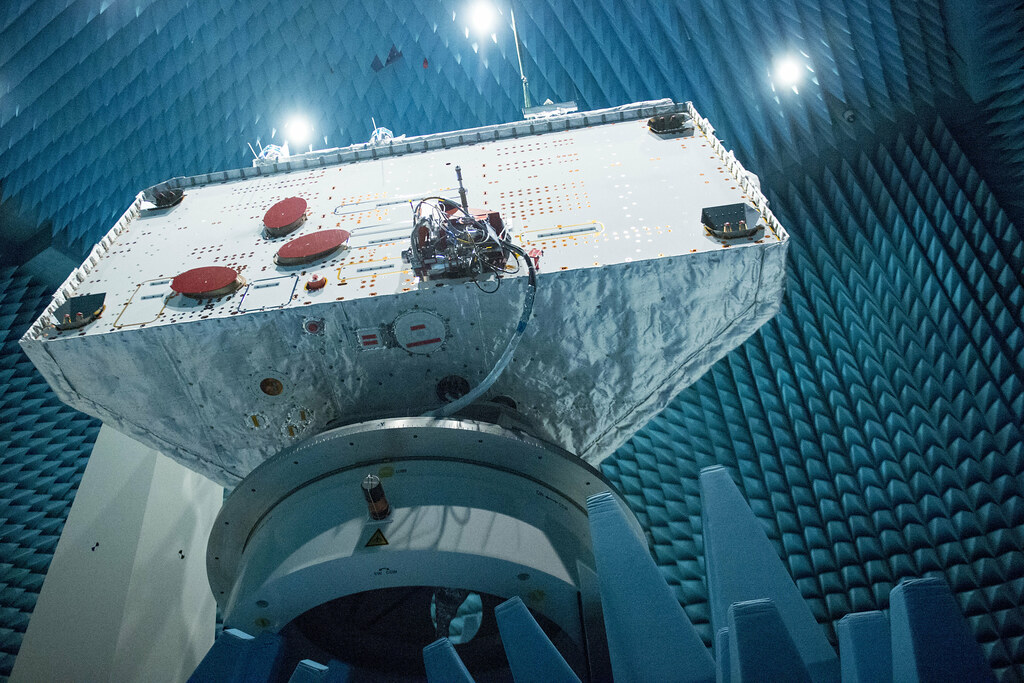
BepiColombo mission support is vital as the spacecraft approaches Mercury’s orbit. Sener’s systems play a key role in ensuring the mission’s success.
Overview of BepiColombo Mission
The BepiColombo mission, a joint venture between the European Space Agency (ESA) and the Japan Aerospace Exploration Agency (JAXA), aims to explore Mercury, the closest planet to the Sun. This ambitious project has recently gained significant support from Sener, a leading engineering company that has provided vital spacecraft systems for the journey.
Launched in October 2018, BepiColombo consists of two separate spacecraft: the Mercury Planetary Orbiter (MPO) and the Mercury Magnetospheric Orbiter (MIO). These spacecraft are designed to work together to gather extensive data about Mercury’s surface, composition, and magnetic field.
As the mission approaches its destination, the integration of advanced technology and proven systems has become increasingly crucial. Sener’s contributions include:
- Thermal control systems to protect the spacecraft from extreme temperatures.
- Propulsion systems designed to enable precise maneuvering during the journey.
- Structural components that ensure the spacecraft’s integrity during launch and transit.
Overall, the BepiColombo mission support from Sener showcases the importance of reliable engineering in achieving successful interplanetary exploration.
Importance of Sener’s Support
The BepiColombo mission, a joint endeavor by the European Space Agency (ESA) and the Japan Aerospace Exploration Agency (JAXA), is set to make history as it approaches Mercury. A critical aspect of this ambitious project is the unwavering support provided by Sener, a key player in the space industry. Their expertise in spacecraft systems has been instrumental in ensuring that the mission remains on track.
Sener’s involvement encompasses several vital areas:
- Thermal Control Systems: Sener has developed advanced thermal systems that are crucial for managing the extreme temperatures of space.
- Power Management: The company’s state-of-the-art power distribution systems ensure that all spacecraft components operate efficiently.
- Software Development: Sener has provided robust software solutions that facilitate the mission’s operations and data analysis.
The importance of Sener’s support cannot be overstated as the BepiColombo mission continues its journey toward Mercury. Their proven systems aid in navigating the complexities of space travel, contributing to the overall success and reliability of the mission. As the spacecraft draws closer to its destination, the collaboration between Sener and the mission teams showcases the vital role of innovative engineering in space exploration.
Current Status of Mercury Orbit
The BepiColombo mission is currently approaching its final destination, Mercury, with significant progress made in the journey. As the spacecraft nears its orbit around the planet, engineers and scientists are closely monitoring its systems to ensure everything functions as intended. The collaboration between various teams has been essential in reaching this pivotal moment.
One of the key contributors to this success is the ongoing support from Sener, which has played a vital role in the mission’s overall performance. Their advanced spacecraft systems have proven to be reliable, providing crucial assistance during the spacecraft’s complex maneuvers. As BepiColombo prepares for its arrival, the focus is now on the data collection and scientific observations that will be conducted once in orbit.
The current trajectory places BepiColombo on track for its first Mercury flyby, scheduled to occur in the coming months. This phase will involve a series of intricate operations designed to gather detailed information about the planet’s surface and environment.
- Monitoring of onboard systems is ongoing.
- Collaboration among teams continues to be crucial.
- Data collection efforts will ramp up after entering orbit.
Technical Challenges Ahead
The BepiColombo mission, a joint endeavor by the European Space Agency (ESA) and the Japan Aerospace Exploration Agency (JAXA), faces several technical challenges as it approaches Mercury. Among these challenges are the extreme temperatures and intense radiation that characterize the innermost planet of the solar system.
To navigate these hurdles, the mission leverages advanced technology and engineering. Sener, a key player in providing mission support, has developed several systems that enhance the spacecraft’s resilience. These systems include:
- Thermal Protection Systems: Designed to withstand the extreme heat during close approaches to Mercury.
- Radiation Shielding: Protects sensitive instruments from high levels of radiation.
- Propulsion Systems: Ensures precise maneuvering during the spacecraft’s journey.
As the BepiColombo mission support team continues to monitor the spacecraft’s performance, they remain vigilant in addressing any potential issues that may arise. With Sener’s proven systems in place, the mission is well-equipped to tackle the technical challenges ahead, ensuring a successful journey to Mercury and valuable scientific discoveries.
Future of Space Exploration
The future of space exploration is increasingly reliant on collaborative efforts and advanced technologies, with missions like BepiColombo exemplifying this trend. As the spacecraft continues its journey to Mercury, the support from Sener’s spacecraft systems proves crucial for its success. This mission not only aims to unveil the mysteries of Mercury but also sets the stage for future interplanetary exploration.
One of the most promising aspects of the BepiColombo mission is its potential to gather data that could inform subsequent missions to other planets. By leveraging proven systems developed by Sener, the mission benefits from enhanced reliability and efficiency. This is vital as the harsh conditions near Mercury present numerous challenges.
Additionally, the technological advancements gained from BepiColombo could be applied to future spacecraft, improving their design and operational capabilities. The lessons learned and the data collected will contribute to our understanding of planetary formation and evolution.
In conclusion, the BepiColombo mission support reflects a significant investment in the future of space exploration, paving the way for deeper insights into our solar system and beyond.
Impact on Scientific Research
The BepiColombo mission is set to revolutionize our understanding of Mercury, the innermost planet in our solar system. As the spacecraft approaches its destination, the impact on scientific research becomes increasingly significant. With support from Sener, the mission benefits from proven systems that enhance the overall reliability and efficiency of data collection.
Researchers are eager to explore several key areas, including:
- Planetary Formation: Insights into Mercury’s composition will shed light on the processes that shaped terrestrial planets.
- Magnetic Field Studies: Understanding Mercury’s weak magnetic field can provide clues about its core and geological activity.
- Surface Analysis: High-resolution imaging will reveal the planet’s surface features, contributing to our knowledge of impact cratering and volcanic activity.
The BepiColombo mission support not only ensures the successful operation of the spacecraft but also enhances international collaboration in planetary science. As data begins to flow back to Earth, the scientific community anticipates a wealth of information that will drive future research and exploration efforts, paving the way for new discoveries beyond Mercury.
Sener’s Role Explained
Sener has played a crucial role in the success of the BepiColombo mission, providing essential systems that support the spacecraft’s journey to Mercury. Their expertise in engineering and technology has been instrumental in overcoming the various challenges faced during the mission’s progression.
The support from Sener includes the development of several critical components:
- Onboard systems: Sener designed vital systems that ensure the spacecraft’s functionality and reliability while navigating the harsh environment of space.
- Thermal control: The company implemented advanced thermal management solutions to protect the instruments from extreme temperatures encountered near Mercury.
- Propulsion systems: Sener’s innovative propulsion technologies have been pivotal in executing complex maneuvers required for the spacecraft’s trajectory adjustments.
As the BepiColombo mission support evolves, Sener continues to collaborate closely with other teams to address ongoing challenges. With the mission nearing its rendezvous with Mercury, the effectiveness of Sener’s systems is becoming increasingly apparent. This partnership not only enhances the mission’s chances of success but also contributes significantly to our understanding of Mercury and the broader field of planetary science.
What Comes Next for BepiColombo
The BepiColombo mission is set to enter a critical phase as it approaches Mercury’s orbit, marking a significant milestone in space exploration. With the support of proven systems, the mission aims to unlock mysteries about the planet’s environment and geological history. The next steps involve a series of intricate maneuvers designed to ensure a successful orbital insertion.
As the spacecraft draws closer to Mercury, scientists and engineers will closely monitor its trajectory. This phase requires precise calculations and adjustments to maintain the planned path, taking full advantage of Sener’s advanced technology. The integration of these systems underscores the importance of BepiColombo mission support, which is vital for the mission’s success.
Throughout its journey, BepiColombo will conduct numerous scientific observations, exploring the planet’s surface and magnetic field. The data collected will not only enhance our understanding of Mercury but will also contribute to broader planetary science. As the mission progresses, the collaboration between various international space agencies and technology providers like Sener will be crucial. This partnership exemplifies how shared expertise can aid in overcoming the challenges of deep-space exploration.
The success of the BepiColombo mission support has been underscored by the robust systems developed for this unprecedented journey. Engineers are continually optimizing these systems to ensure they can withstand the harsh conditions of Mercury’s environment, further enhancing BepiColombo mission support.
By europeanspaceagency via Openverse